Yesterday we had another flat tire on the other side of the trailer. I was sitting outside and heard this loud hissing sound, started looking for it and there was a little hole the air was coming out. Called AAA again, they were hear in less than an hour and he put the new tire on that side. Called Discount Tire again to see if they had another tire; I guess they stock up on trailer tires for the Snowbirds because they had 17 of them. So off to Discount tire, they are very busy and very fast.
On our way home we noticed that the new field of sheep had some equipment and vehicles at one end of the field. You already know that I am fascinated with these sheep. We drove down a dirt/sand road and went over and talked to the head guy. They were setting up a sheering station and would be sheering tomorrow, and yes we could watch. They will start at about 0800 and be done about noon.
So out we went this morning. They had 16 stations to sheer the sheep. they would be sheering 1,000 sheep today.
First we had to get to the sheep by crossing this irrigation ditch. Seems like no big deal but what you don't see is the dry rot on this wobbly board.

By the time we get here at 0910 they have the sheep in the pen

And into the shoot

Sorry for the bad picture. These goats are trained to somehow go out in the herd of sheep and then bring the sheep up to the pens.

Friendly guys, they did their work and now they rest for the rest of the day

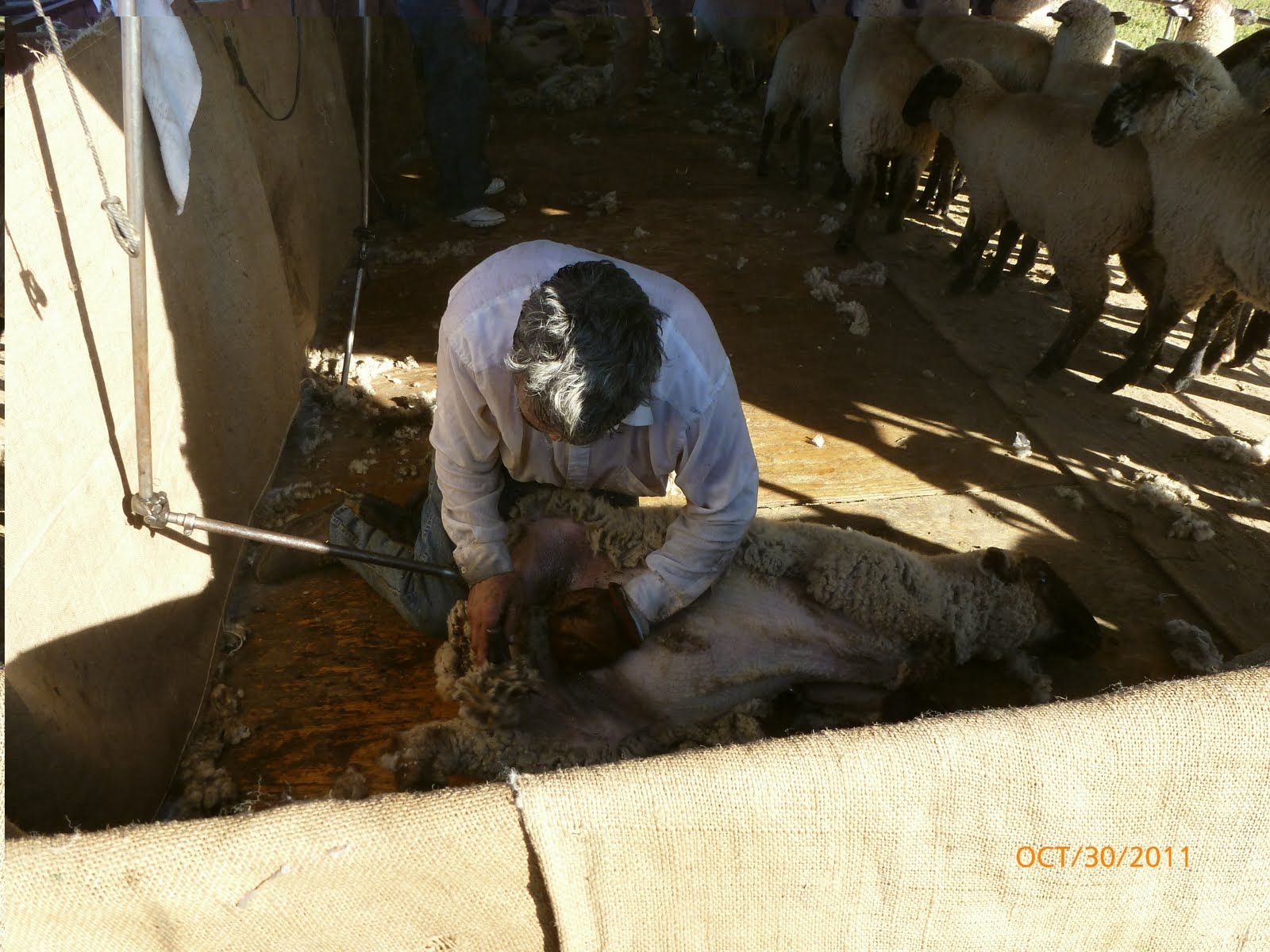
These two people are fast, the person on the left has been doing this for 30 years. He can sheer a sheep in one minute. These sheep are small, last spring lambs and have never been sheered so they struggled more but he could still shear one in 2 - 3 min, averaging about 3 min per sheep for four hours. They are paid by the sheep. Some of the newer people were really struggling and only sheared about five to his 15.

There are 16 stations and the sheep just keep moving along until someone grabs a leg, pulls the sheep over to the station and the buzzing starts


This is the compactor that compresses the wool. Two people gather up the wool and keep stuffing it in there and then the compactor compresses it more until they can't get any more in the bag. One square bag weighs about 500 lbs. Yes 500 lbs.


I felt kind of sorry for this guy, apparently he is new and just does not have the knack of the others

Two people are constantly gathering up the wool and carry it to the platform for the people stuffing the wool into the compactor


One of the youngsters sitting on top of a 500 lb bale of wool

The bag is full and he is sewing up the top

Then it takes two big strong men to roll the bale onto the trailer

When the sheep are sheared they go into this pen. Note there are only two in this pen and the pen next to it has five

There are 16 pens behind the 16 people shearing the sheep. Notice on the left side of the pens there is a board that reaches across three pens. On top of the board is a piece of paper. When these little pens get about 15 sheep in them two people go to each pen and count the sheep, write that number on the piece of paper and each sheep is then branded with green paint. This brand is HL.

Back to the beginning of the line, these two are the fastest and the other end is the slowest

Waiting for his turn. Notice the tip of the left ear has been cut off. Every one is like that. This cut is a mark for this rancher's sheep. Usually the cuts on the ear are a registered mark, just like branding.

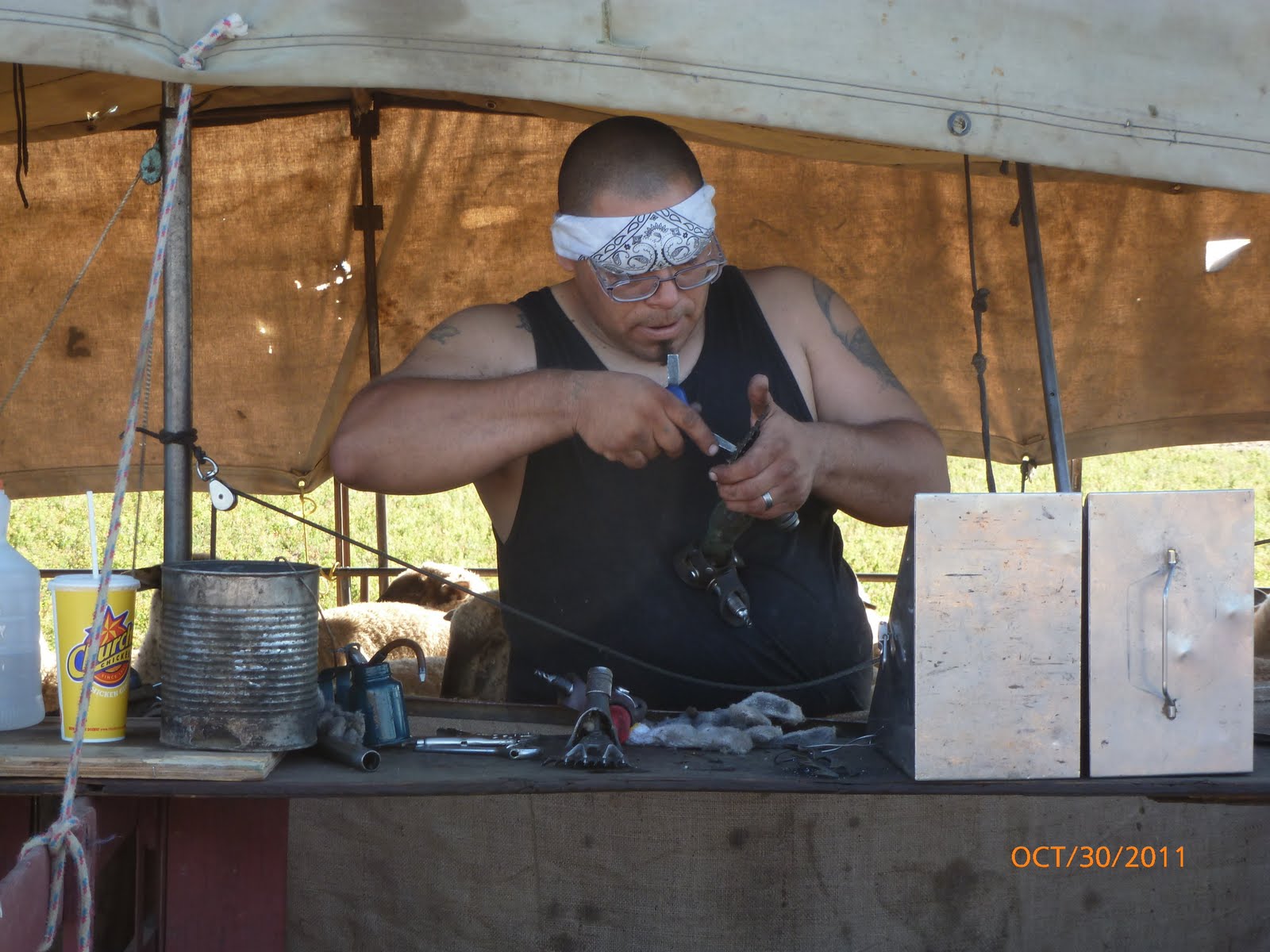
Each person is responsible for his own shears, blade and repairing as needed. One blade is used for only three sheep

This is the guy that has been doing this for 30 years, he started at the age of 15. He shears each one exactly the same, same strokes, moving his feet and body to hold the sheep is the same on every sheep. No wasted movements. This is hard work, he never sits down and has complete control of each sheep.


Repairing his clippers
Counting and branding them with green paint


After the paint and the number recorded on the little piece of paper the Sheep get to run out into the field to join the others.


Oops, got a little behind in stuffing the compactor


This is a generator on the truck and other equipment

This guy sharpens the blades for the clippers. Notice the buckets/pails on the right. Each person doing the shearing deposits his blades into his bucket and they are sharpened and put back in the bucket. The sharpener has to have a good eye for sharpening. Remember each blade is used on only three sheep. FYI, He is wearing safety glasses.


There is one 5th wheel and the rest of the people use tents and cook their food over an open fire. Tomorrow everything will be packed up and they will go to the next place and the sheep will be going to the butcher. The field tomorrow will look like they were never there.

As we leave, these sheep are still waiting their turn

The workers were all very friendly and very informative. I think they might have thought that we were a couple of old crazy city slickers. It was fun learning how this was all done. No computers, no electricity, and water came from a 500 gallon tank that was pulled behind the truck and was used for the sheep and the workers.
Well that's it for today. Sorry this was so long, I just didn't know where to stop.
Safe Travels to all
Nancy & Joe


